Creating an AI replica of yourself: 7 reasons to leave your legacy in your own words
Most memorials are created when it's already too late, from scattered fragments. There is another way: tell it yourself, in your own voice and words, for those who come after you.
6 min read
In 30 seconds
- An AI replica of yourself is a conversational memorial you build while you're alive, from your memories, your writing style and, if you wish, your voice.
- Its big advantage: you tell the story first-hand, and you decide what is true.
- It is not immortality or a copy of your mind: it is an honest legacy that always presents itself as an AI.
- You can start this afternoon with the 15 questions in this article.
In this article
The problem with waiting
When someone dies, their family turns into archaeologists: digging through chats, drawers and phones to piece together who they were. There are always missing pieces. How did the grandparents meet? What was the Sunday recipe? Why did they leave their hometown?
Creating an AI replica of yourself flips the problem around. Instead of others reconstructing you from clues, you leave the portrait: your stories, your reasons and your way of putting things.
For the day my grandchildren ask what I was like.
7 benefits of creating your own replica
1. Your story, told first-hand
Nobody knows better than you why you made each decision. What you share is not a guess based on photos or stray messages: it is the source. And it shows in every answer.
2. The way you really talk
Your chats and voice notes teach the AI your expressions, your emojis and how you say good morning. Because you provide them, there is no doubt about who wrote each message or what you meant.
3. Answers to questions nobody has asked yet
Your grandchildren will have questions twenty years from now: what scared you at their age? What was your neighbourhood like? What music did you dance to? A replica can answer with your memories, not with guesses.
4. You decide what is true
In LiveMemoriesAI, every detail of the portrait shows where it came from and waits for approval before it becomes part of it. If you create your own replica, you are the one who approves. Nothing is taken as fact without your say-so.
5. A gift that spares your family the guesswork
You save them from rebuilding you out of fragments at the worst possible moment, and you leave them something they can explore at their own pace, when they're ready.
6. Looking back on your life is good for you too
It's not only for others. Back in 1963, psychiatrist Robert Butler described the life review: remembering and ordering your own story helps you make sense of it. Writing your memories is a gift to yourself as well.
7. Full control over your legacy
You decide what to share and what to leave out, who can talk to your replica and whether it should use your voice. And you can export or delete everything whenever you want.
What a replica is not
It's worth being clear, because there is a lot of confusing marketing out there:
- It is not digital immortality. It doesn't move your consciousness anywhere. It is an AI that knows your memories and imitates the way you express yourself.
- It doesn't speak on your behalf. It is an archive that answers, not someone who decides for you.
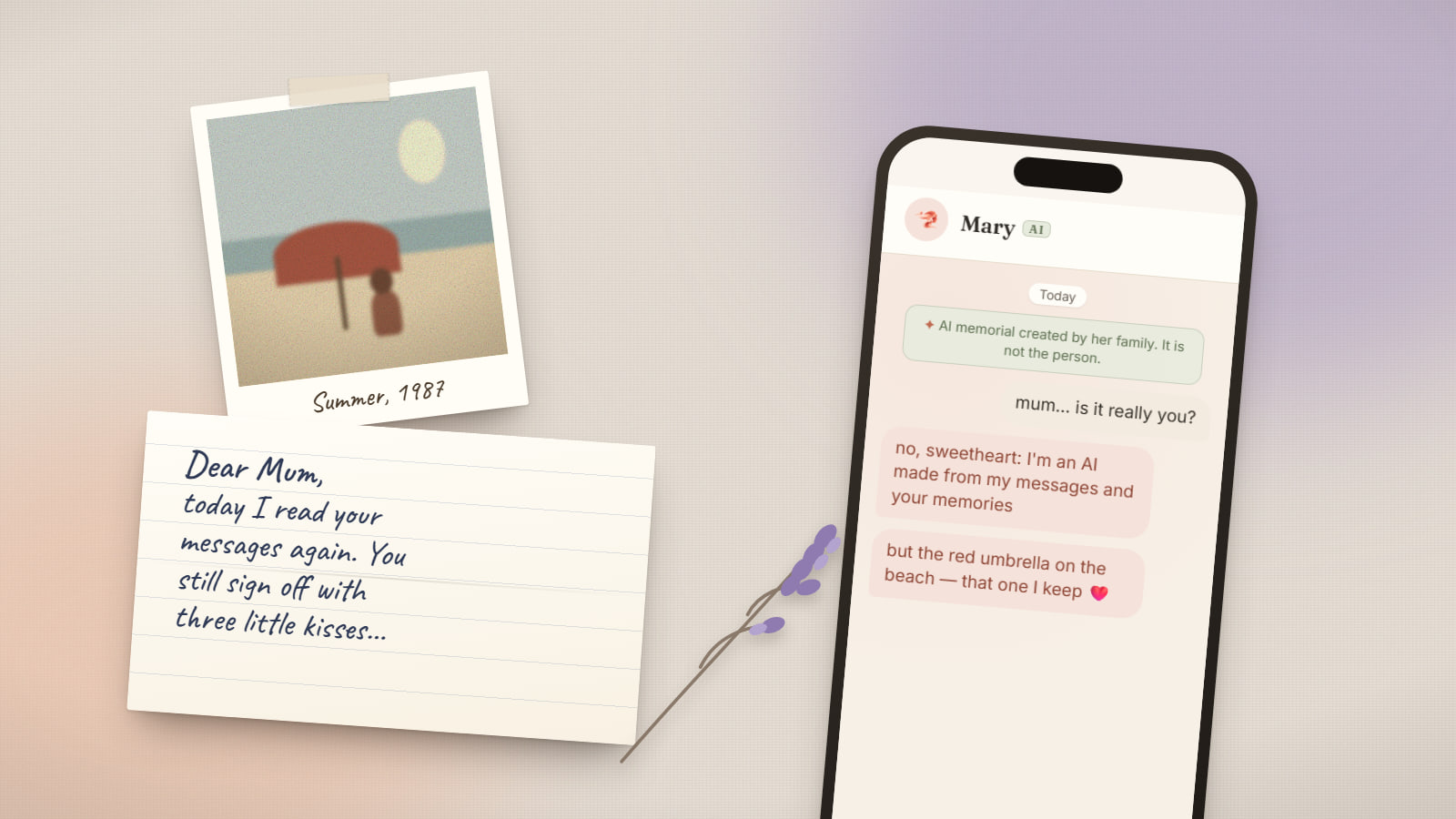
- It doesn't lie about what it is. In LiveMemoriesAI the replica always presents itself as an AI and never keeps up the pretence when asked directly.
- It doesn't invent your life. If you haven't shared a memory, it won't claim it: it answers in your style, without filling gaps with made-up stories.
Who is it for?
If you want to pass your story on to your grandchildren
The anecdotes, places and names only you remember.
If your family lives far away
So your children or grandchildren, growing up in another city or country, know where they come from.
If you hold knowledge that would be lost
Recipes, crafts, sayings, home remedies: everything that was never written down.
If you are facing an illness
Calmly and without rushing, to say what matters in your own way.
15 questions to start this afternoon
You don't need to write a memoir. Answer in short sentences, as if you were telling someone in the kitchen. Each answer is one more memory for your replica.
Your first legacy session
- Where were you born, and what was your childhood home like?
- Which smell or taste takes you straight back to those years?
- Who was the person who shaped you most as a child?
- How did you meet the love of your life, or your closest friends?
- What was your first job, and what did it teach you?
- What was the hardest decision you ever made, and why did you make it?
- What are you proudest of?
- Which phrase do you repeat so often your family laughs when they hear it?
- Which recipe, song or place do you never want forgotten?
- What always made you laugh, no matter what?
- What did you learn late that you wish you had known sooner?
- How were birthdays and holidays celebrated in your home?
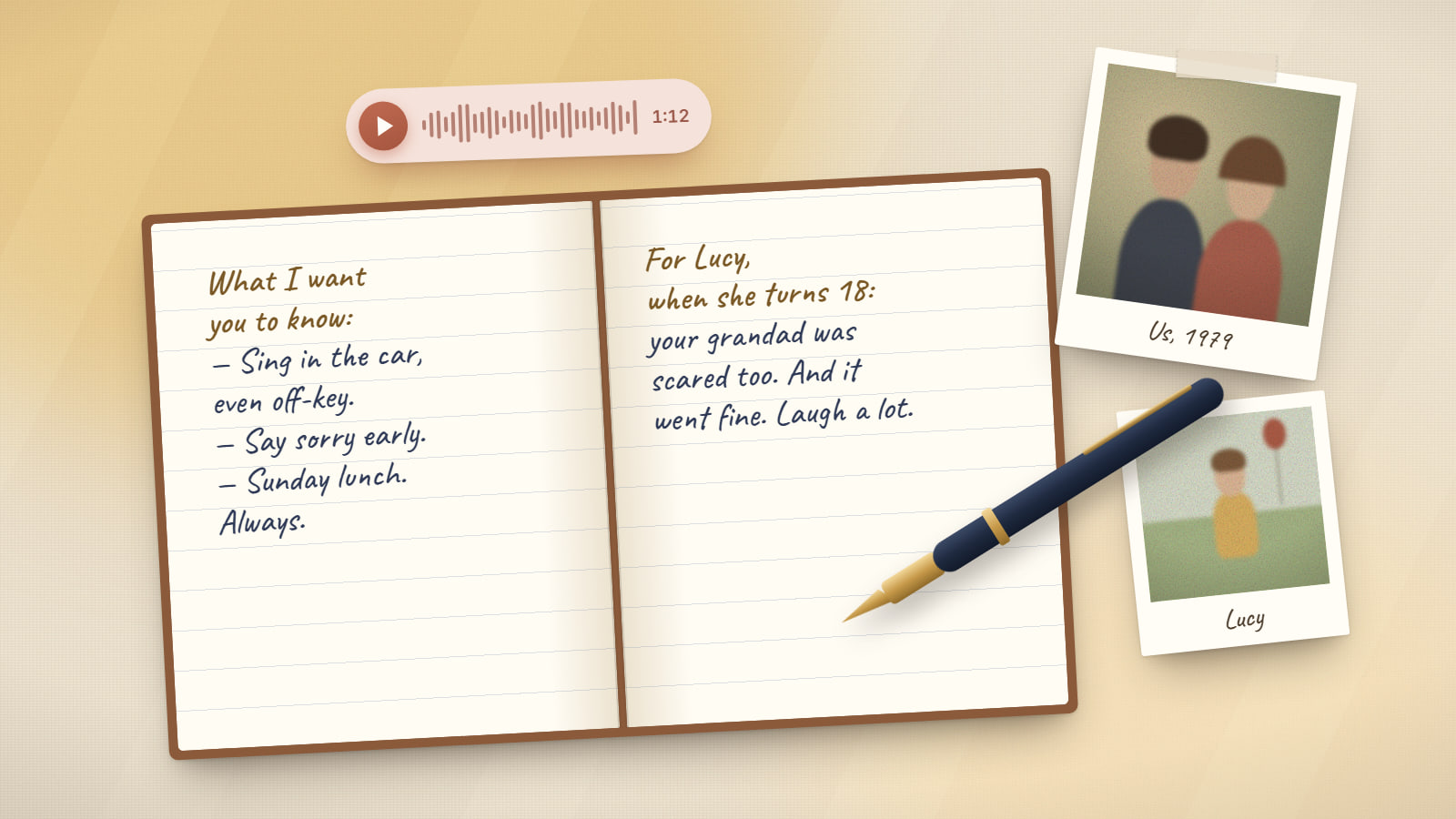
- What would you tell your grandchild on their eighteenth birthday?
- What can't you stand (affectionately speaking)?
- How would you like to be remembered?
How to do it safely
- Choose a service that isolates your data from everyone else's and clearly tells you which providers are involved.
- Make sure you can export and delete everything whenever you like.
- Check that the AI always identifies itself as an AI, including when it speaks with your voice.
- Think about who will have access and talk it over with your family: a legacy is better received when it isn't a surprise.
To go further, read the 8 questions to ask before choosing an AI memorial. And if you also want to organise your chats, photos and voice notes, here is how to preserve them step by step.
Common questions
Frequently asked questions
Can I create a replica of myself while I'm alive?
Yes. You can start your own memorial, write your memories and add your messages, photos and voice notes. You approve the portrait and decide whether, and when, to invite anyone.
Is it the same as a digital twin?
The idea is similar, but "digital twin" usually refers to virtual copies of machines or processes. A conversational replica is a legacy: it knows your memories, imitates your writing style and always says it is an AI.
Could my replica say things I never said?
It will answer new questions in your style, but in LiveMemoriesAI it never claims specific memories without a source: if you didn't share it, it won't make it up.
What happens to my data?
Your memorial is isolated from all others and you can export or delete it whenever you like. Full details are in our privacy policy.